
Adventurers come to India through the freedom struggle and ultimately establish their own empire, becoming a political power. However, besides the British, several other European companies also came to India for trade. However, before discussing them, we will first examine the conditions that led European companies to come to India. India and Europe had strong trade relations since ancient times. Indian cotton, silk, textiles, and spices were in high demand in the European market. In the Middle Ages, merchants dealt with the Mediterranean and European parts of the world. Since the Mediterranean route had not yet been discovered, trade was conducted through Constantinople, now Istanbul. However, when the Ottomans established control over Asia Minor and captured Constantinople in 1453, they also controlled the old trade routes between East and West. Furthermore, merchants from Venice and Genoa, taking advantage of their location near Constantinople, established trade routes. They established a monopoly on trade between Europe and Asia, refusing to allow any new European nation-state to participate. Consequently, West European states and merchants searched for new and unique trade routes. Portugal and Spain were the first to take steps in this direction. Their governments sponsored the merchants’ sea voyages, and scientific discoveries such as the marine compass and the invention of long-distance ships also helped in this. Due to this, Christopher Columbus of Spain set out on the voyages of the Bois in 1492, but instead of reaching India, he reached America.
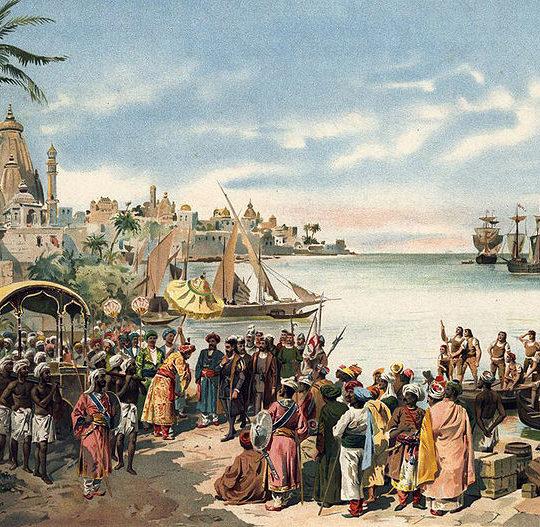
Finally, in 1498, Vasco da Gama discovered a new sea route, the Cape of Good Hope, to reach India from Europe. Let’s explore the details. In 1498, Vasco da Gama arrived in Calicut, an important port in Southwest India. He was welcomed and granted certain privileges to promote trade, as trade was an important source of income for the local merchants. After a three-month stay in India, Vasco da Gama returned to Europe with a rich cargo. He sold this cargo at a very high rate in the European market. It is said that he earned a return of 60 times his entire voyage cost. From this sale, Vasco da Gama re-established a factory in India in 1501. This marked the beginning of trade links between India and Portugal, and Calicut emerged as a trading center. The growing power of the Portuguese and their unfair trade demands, such as their attempt to monopolize the Arabian Sea, led to a major conflict between them and the local merchants. Portuguese traders demand that the Zamorins expel Muslim traders from their territory. The Zamorins refuse to comply, leading to a military face-off between the two, in which the Zamorins are defeated and the Portuguese establish military superiority.
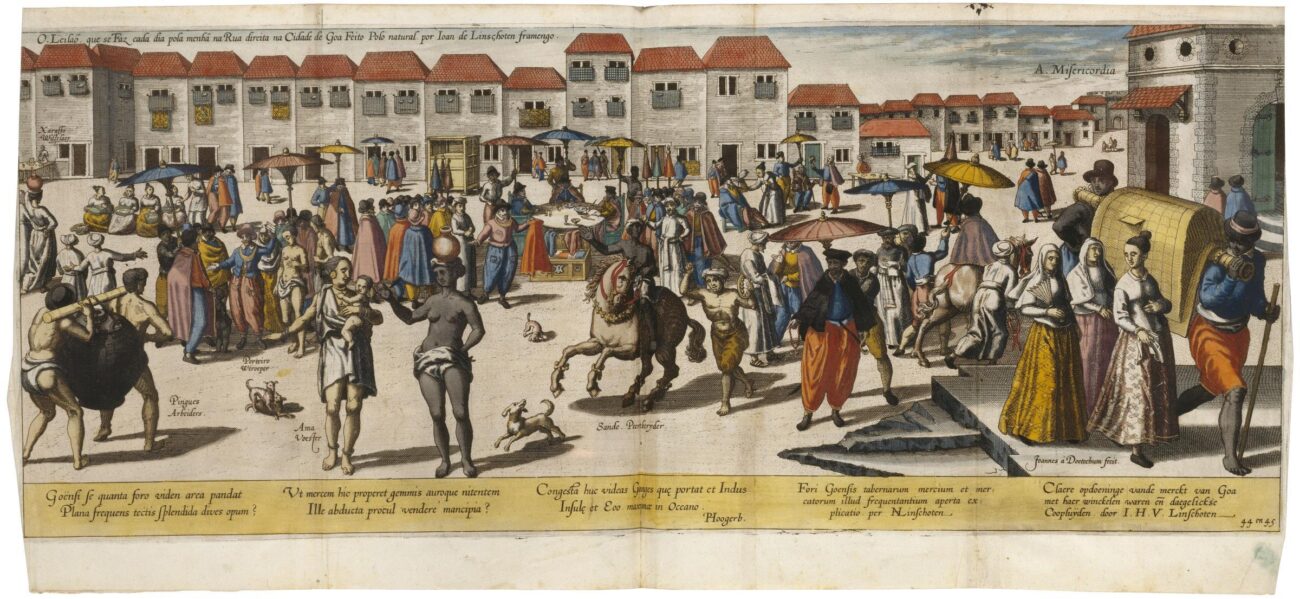
After this, the rise of Portuguese power began. Let us understand how the rise of Portuguese power in India came. Their policy was to establish their control over the Indian Ocean, hence their policy is also called Blue Water Policy. There was a trade license or pass, which all Indian and Asian traders had to obtain from the Portuguese Company to trade in the Indian Ocean. Also, long-route ships that stopped at Portuguese-controlled ports and headed towards the Strait of Malacca also had to obtain this license. Those who did not have this pass were seized by the Portuguese. To implement this, they kept their military ships and canoes alongside the trading ships. In 1590, Alfonso became the governor of Albacar, replacing Almeida. He captured Goa from the Sultan of Bijapur in 1580. He is considered the real founder of Portuguese power in India and was succeeded by the governor of Calicut. After him, Indians became governors. The capital was shifted from Cochin to Goa and Daman was also captured in 1559 AD. The Portuguese’s control over the post areas and their superior naval power helped them a lot and by the 16th century, the Portuguese captured not only Goa, Daman Diu and Salem
Rather, they controlled a large area along with the Indian castes, but then their power started declining from the 16th century onwards. In 1631, Mughal Emperor Shah Jahan handed over Hooghly to Qasim Khan, a nobleman. Then in 1661, the King of Portugal handed over Bombay to Charles de Second of England as a dowry, and the Marathas conquered it. In this way, the power of the Portuguese diminished considerably, but even after this, they maintained control over Goa and Daman till 1661. Famous Portuguese governors like Francisco Xavier came to India in 1542 with a sentence. He is still highly respected by the Catholic Christians of India. Cultivation of tobacco, tomato, potato and chilies was also introduced by him in India. In 1556 AD, he established India’s first printing press in Goa. Friends, this was the talk of the first European power to come to India for trade. Now let us know about the next trading company that followed him, that is, the Duckworth Company in the country. The people who live there are called ducks.
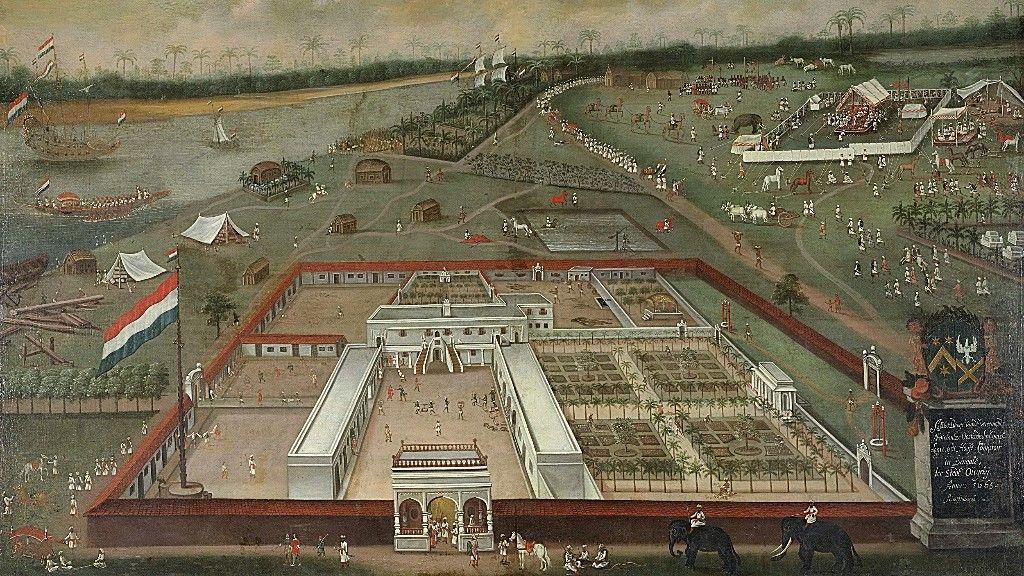
Parliament granted this company the right to invade and conquest trade with India and the East for 21 years. They arrived in India and ended the Portuguese monopoly. They established their first factory in Masulipatnam, Andhra Pradesh, in 1610, followed by other factories in Pulicat in 1653, Surat in 1655, Chinsura in 1653, Patna, Balasore, Nagapattinam, Karaikal, Kasim Bazar in 1659, and Kochi in 1663. Their headquarters was in Pulicat, Tamil Nadu. In the 17th century, the Dutch succeeded in establishing a monopoly on the spice trade from India. They also exported cotton textiles, indigo, silk, and opium from India. A conflict erupted between the English Company and the Dutch, in which the Dutch faced defeat. This battle, also known as the Battle of Chinchura or the Battle of Hooghly, finally defeated the Dutch East India Company. It is liquidated in 1798. Friends, let’s talk about the most successful trading company i.e. the English East India Company. Arrival of English India Company: Impressed by the success of Portuguese and Duck traders, the English East India Company was established in 1599 in a group of merchants of England named Merchant Adventurers. The full name of the company was The Governor and Company of Merchants of Trading into the East Indies. On 31 December 1600, Queen Elizabeth II of England granted charter of Eastern Trade to the East India Company for 15 years, which meant that this company would have monopoly of trade with the East. No other company from England would trade here. Captain William Hawkins was sent to the court of Mughal Emperor Jahangir.
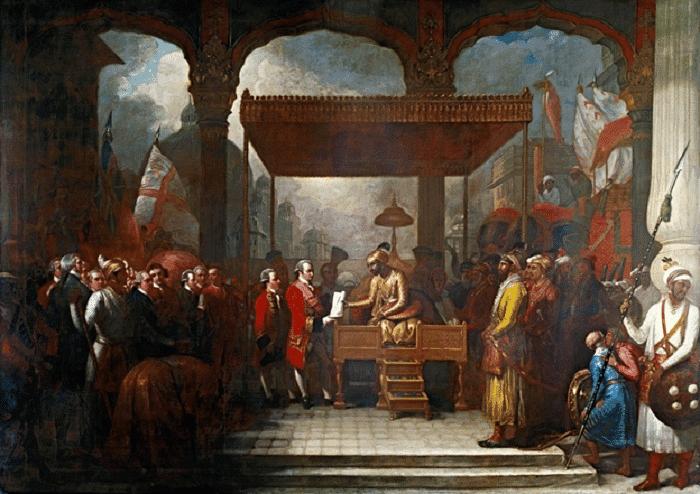
Their goal was to obtain a royal decree from Jahangir, which would force them to withdraw from Jahangir’s court to their trading factory in Surat. The British realized that their trade would be difficult under the Portuguese, so in 1600, a battle took place in a fort near Surat. The British defeated it. This convinced Jahangir of the British’s power. In 1613, Jahangir granted them permission to establish factories on the West Coast of India. The British established their first factory in Surat in 1613 and granted the company a royal charter, giving it freedom to trade and establish factories in Mughal territory. Subsequently, the company established factories in various places in India, such as Masulipatnam, Agra, Ahmedabad, Balasore in Orissa, and Hariharpur. In 1639, the company was granted the lease of Madras, building Fort Sanhosse. In 1668, the company received the lease of Bombay from Charles de Second. Charles de Second received it in Portuguese cord. As we have already seen, in 1698-99, with the permission of the Bengal governors, Azam and Shan, the Company received the zamindari of Sutanu Gobindpur and Kalikata for a payment of just ₹1,200. Fort William was established here in 1700. Subsequently, in 1771, Mughal Emperor Farrukh Siyar issued a firman granting the Company even more rights, such as duty-free trade in Bengal for a mere ₹3,000 annual tax. Permission was also granted to purchase land around Kolkata. Furthermore, coins issued by the Company in Mumbai were also valid throughout the Mughal Empire. Therefore, this firman was also known as the Company’s Magna Carta. After this, the Company’s power increased, and finally, for the first time, the Company established its empire in Bengal.
The next European company was the Danish East India Company, established in 1616. Established its factory in Tamil Nadu in 1620 and in Serampore, Bengal in 1676. Serampur was its importance center and headquarters, but it could not establish itself as a strong trading post in India. In 1845, it sold all its settlements to the British Company and left. Friends, let’s talk about the last European company to arrive in India. The French East Company established its first factory in Surat. After that, in 1669, with permission from the Sultan of Golconda, it acquired a village called Pondicherry for its second factory. In 1692, with the permission of Shaista Khan, the Mughal governor of Bengal, the French company established a factory in Chandernagore. After that, the French captured Mahi in Malabar in 1724 and Karaikal in Tamil Nadu in 1739. French Governor Dupleix comes to India and with him begins the story of Anglo-French Wars, also known as Carnatic Wars. The Carnatic Wars were between the English and French companies, about which we will discuss in detail in a separate video. Conclusion: So friends, we saw how different European companies came to India to take advantage of the trade between India and Europe, like they are not behind in using monopoly force and navy. There was a struggle for power among all these companies, in which finally the English company gets success. How the English East India Company, starting from a trading company, establishes its empire in India.