

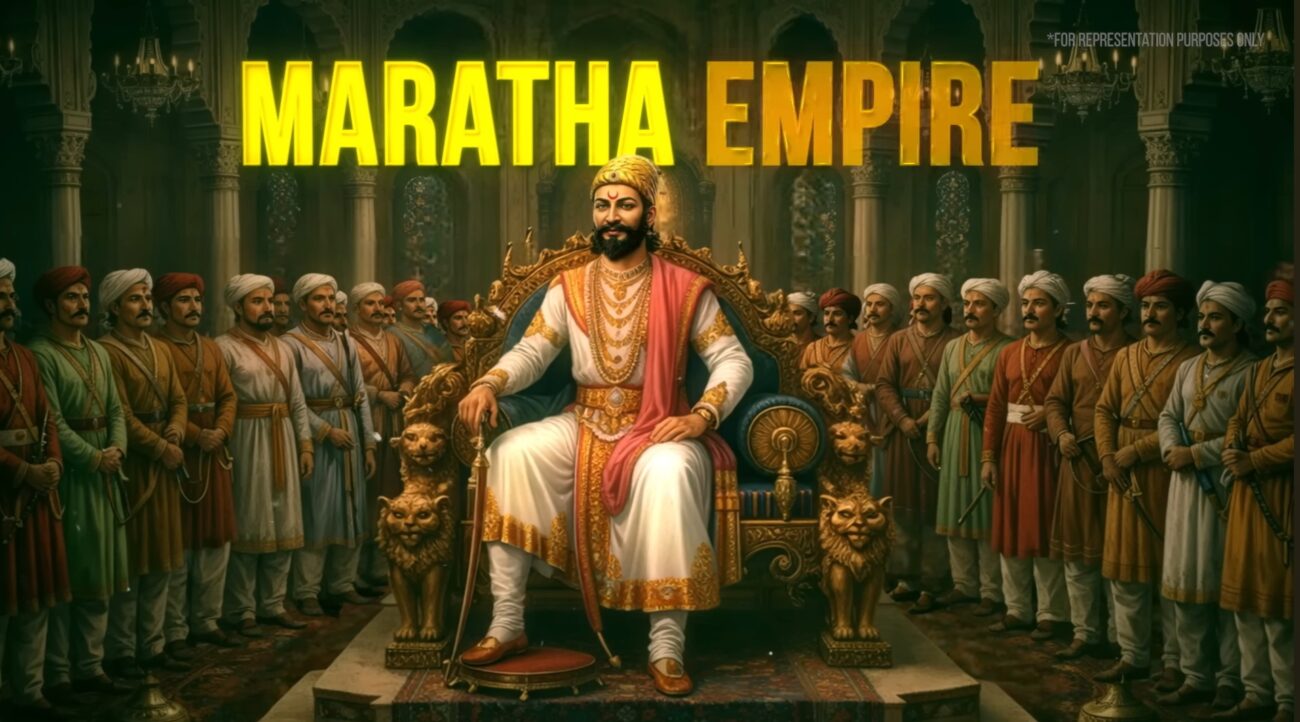
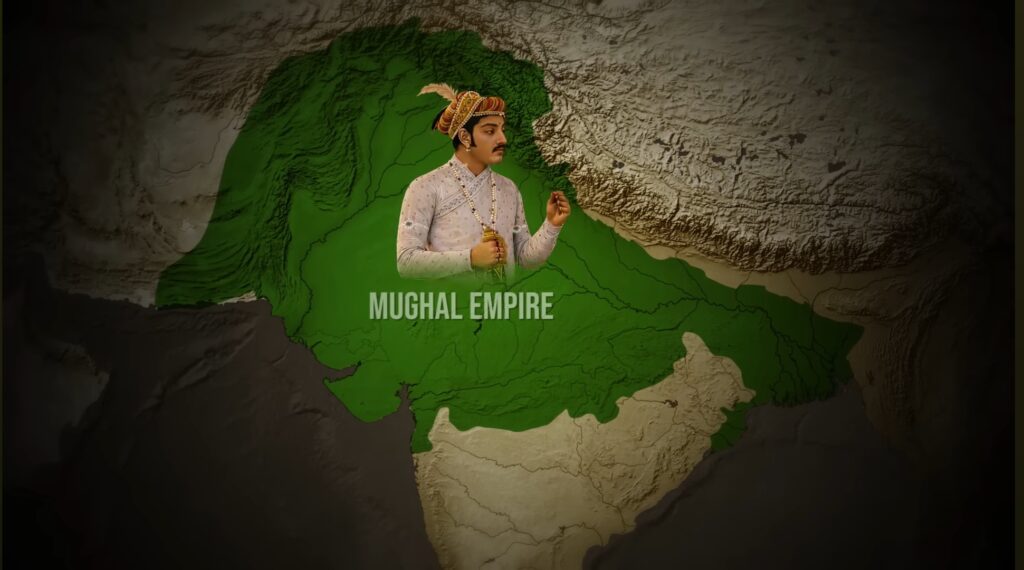
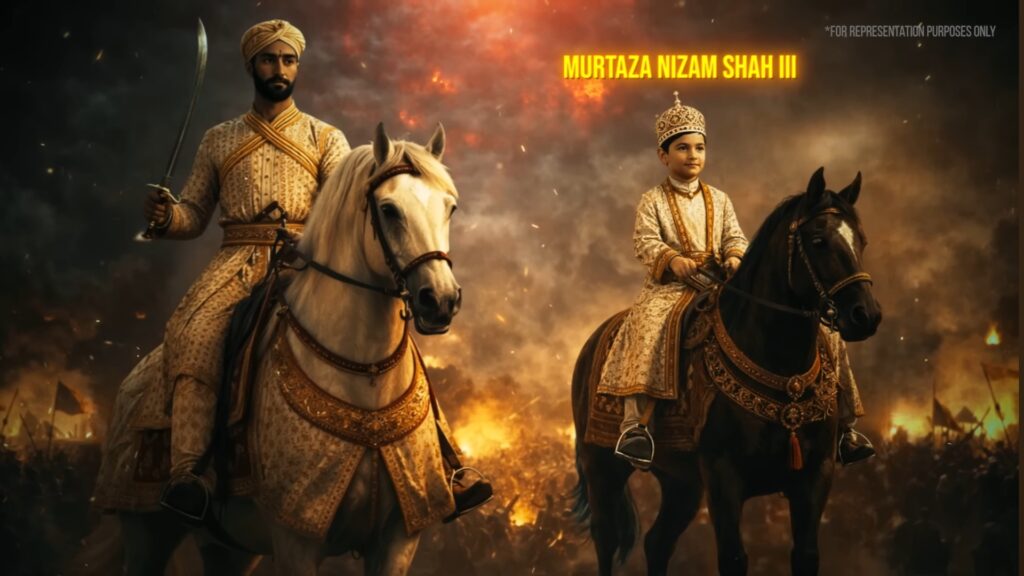
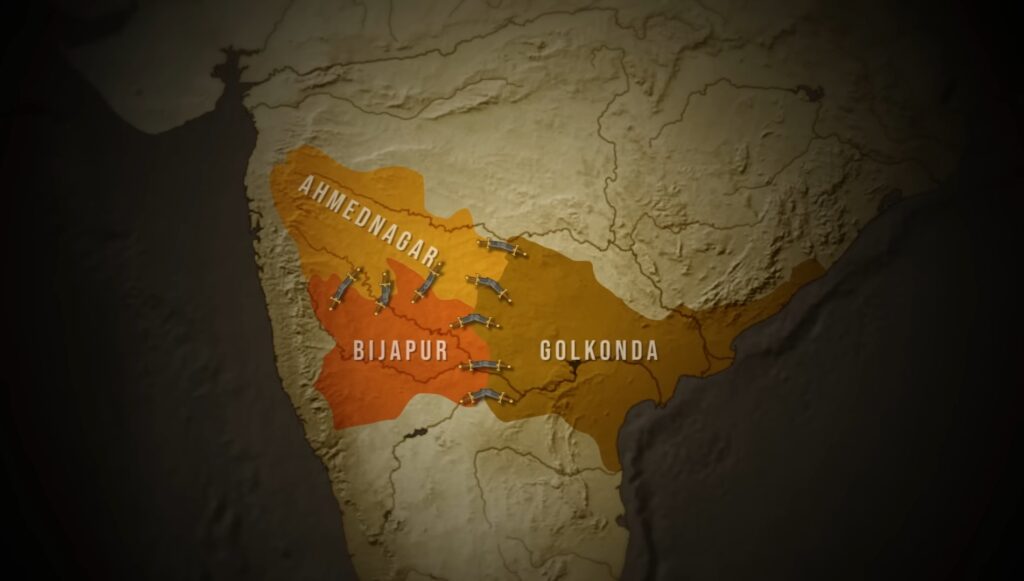
In the 17th century, when nearly all of India was under the control of the cruel Mughal emperor Aurangzeb, European powers had begun to establish their foothold in India, and the Deccan region was being crushed under the feet of Muslim rulers. At that time, the people of India had almost forgotten the meaning of self-rule. Religious conversions were rampant, temples were being destroyed, and Hindus were forced to pay a tax called Jaziya. During this period of slavery, a name emerged like a storm that robbed the enemies of their sleep. It was none other than the Maratha leader, Chhatrapati Shivaji Maharaj. He lit the lamp of self-respect in this dark age and built an empire that even the throne of Delhi paled in comparison. Chhatrapati Shivaji Maharaj possessed neither a large army nor the wealth of the Mughals or Muslim rulers, but he possessed a dream of Hindu Swarajya that shook the foundations of even the greatest sultanates. At just 16 years old, he showed glimpses of becoming a great king by conquering Torna Fort. Later, he enticed the Mughals, the Bijapur Sultanate, Ahmednagar, and Golconda through war and strategy, spreading his victory banner from Maharashtra to Karnataka. He enticed the ruthless Afzal Khan with his cunning and tactics, ripping his stomach open, and then freed Aurangzeb from his fortified captivity by outsmarting his army. Under his leadership, the saffron flag fluttered atop forts, the chants of “Har Har Mahadev” echoed through enemy forts, and his guerrilla warfare tactics repeatedly stunned the enemy. All this laid the foundation for an empire that would become known worldwide as the Maratha Empire. At the beginning of the 17th century, while the Mughal Empire was at its peak in North India under the rule of Shah Jahan, following Akbar and Jahangir, power in the Deccan was primarily divided between three sultanates: Bijapur, Ahmednagar, and Golconda. These three sultanates were at war with each other and also clashed with the Mughals, who were now seeking to strengthen their hold in the South. It was during this turbulent period that the Maratha chieftain Shahaji Raje Bhosale emerged. Shahaji was one of the most astute and experienced warriors in Deccan politics, able to adapt his tactics to the changing times. Sometimes he would fight on behalf of Ahmednagar, and sometimes he would take up his sword for the Bijapur Sultanate. When the Mughal Empire was moving to engulf Ahmednagar, it was Shahaji Raje who led the charge against the Mughals by placing Murtaza Nizam Shah III, a young prince of the Nizam Shahi dynasty, on the throne.
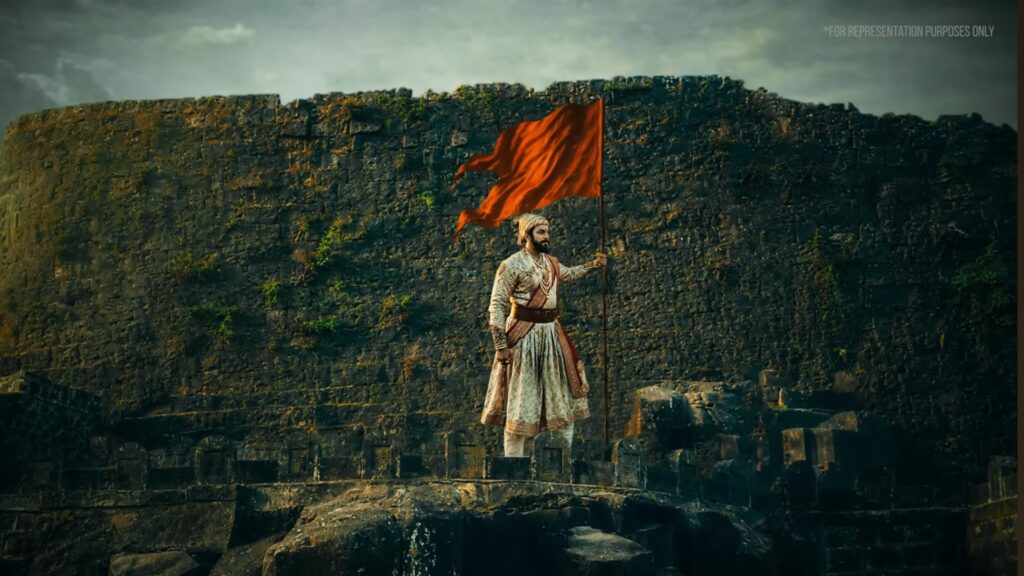
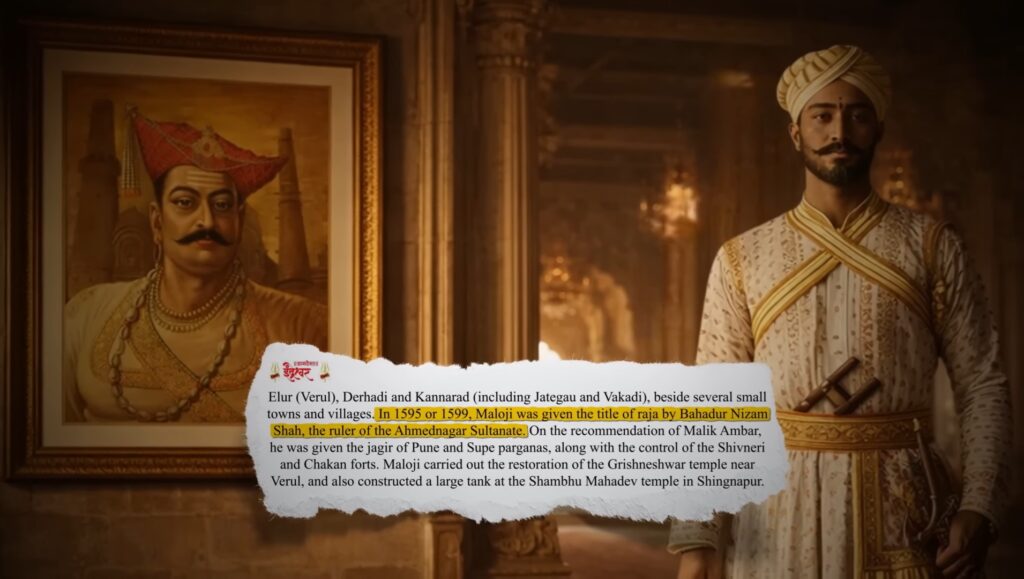
During this turbulent period, Shahaji Raje’s sole objective was to maintain Maratha power in this changing power game. He inherited this courage because his father, Maloji Raje Bhosale, was also a great warrior, once a general of the Ahmednagar Sultanate and held the title of Raja. At that time, Shahaji Raje Bhosale was also the hereditary Jagirdar of Pune and lived with his wife, Jijabai, and the rest of his family in Pune’s Shivneri Fort. It was during this period of political turmoil that the historic day of February 19, 1630, arrived. Amid the beating of drums and the clanging of swords on the hills of Shivneri, Shahaji Bhosale and Jijabai welcomed a child. The child was named Shivaji after the local goddess Shivai. This was not just the birth of a child, but the beginning of a revolution that would change the course of Indian history. Mother Jijabai instilled the spirit of religion, self-respect and freedom in Shivaji since childhood. She would recite verses from the Ramayana and Mahabharata and stories of India’s greatest warriors to young Shivaji. She taught him that standing up against injustice was the true religion. From a young age, Chhatrapati Shivaji Maharaj harbored the dream of establishing Hindu Swarajya. Meanwhile, in 1636, the Bijapur Sultanate accepted the suzerainty of the Mughal Empire, becoming a Mughal tributary state. During this period, Shahaji Bhosale joined Bijapur’s service as a general, and in return, Sultan Mohammed Adil Shah of Bijapur recognized him as the Jagirdar of Pune. However, Adil Shah refused to allow him to stay in Pune, fearing that Shahaji might again become a headache for the Mughals. Therefore, he sent him to Karnataka to lead his military campaigns. In this situation, Shahaji Bhosale entrusted the administration of Pune to his most trusted aide, Daduji Konddev, and built the Lal Mahal in Pune for his wife and children. Chhatrapati Shivaji Maharaj grew up in this palace and trained under Dadu Konddev, who taught him warfare, administration, discipline, and leadership skills. Shivaji Maharaj quickly mastered military techniques such as swordsmanship, horse riding, and fortification.
Shivaji Maharaj observed that the Mughals and the Sultan of Bijapur were only able to rule because they had high mountain forts. He understood that to realize his dream of Swaraj, he needed to conquer as many forts as possible. He also observed that the officials of the Bijapur Sultanate inflicted countless atrocities on the common people. Farmers’ crops were snatched away, and the honor of their daughters-in-law and daughters was not safe. The enemy flag flying on these forts was a symbol of slavery for them. To transform this humiliation into self-respect, a fire of conquering forts ignited within them. At the tender age of 16, when boys his age dreamed of luxury, Shivaji Maharaj, along with a handful of companions, attacked Torna Fort, conquered it, and renamed it Prachandgarh. This was his first major victory, laying the foundation for Hindavi Swarajya. After this, he rapidly expanded his influence, conquering important forts like Purandar, Kondana, and Chakan over the next two years. After conquering these forts, he also brought regions around Pune, such as Supa, Baramati, and Indapur, under his direct control. Shivaji Maharaj then turned his attention to the Konkan region, gaining control of important trade centers like Kalyan. It’s worth noting here that Shivaji Maharaj was directly confronting the Bijapur Sultanate, for which his father, Shahaji Bhosale,was working. Shahaji knew that whatever his son, Shivaji Maharaj, was doing was for Swaraj. However, if he had openly sided with Shivaji, the Bijapur court would have considered him a traitor and killed him. Therefore, it is believed that, as a diplomatic maneuver, he told Sultan Mohammed Adil Shah of Bijapur that he had nothing to do with his son, Shivaji, and that he was responsible for his own actions. However, Adil Shah was not convinced. At that time, Shahaji Bhosale was also making decisions that the Bijapur Sultanate found objectionable. Therefore, in 1648, Shahaji was arrested. He was released a year later on the condition that Shivaji Maharaj would not launch any military campaigns against Bijapur and would return the important fort of Kondana to Bijapur. After this, Chhatrapati Shivaji Maharaj suspended his military campaigns against Bijapur from 1649 to 1655, but spent this time strengthening his administration and army. These years were like the calm before the storm, but in 1656, he again began to sharpen his dream of Swaraj. This year, he captured the Javli region near Mahabaleshwar, and this victory paved the way for further strengthening his power in South and Southwest Maharashtra. By 1659, Chhatrapati Shivaji Maharaj’s rapidly growing power was causing sleepless nights for the Deccan sultanates. One day, a debate erupted in the Bijapur court over who could defeat Shivaji. Afzal Khan, a tall and ruthless general, stepped forward. He boasted that he would capture Shivaji Maharaj without his horse being dismounted, and would parade him through the streets of Bijapur in a cage like a rat. The Bijapur Sultanate entrusted Afzal Khan with the task of capturing Shivaji Maharaj. As soon as Shivaji Maharaj learned of this, he too was consumed by revenge. Chhatrapati Shivaji Maharaj’s father, Shahaji Bhosale, and Afzal Khan had previously worked together for the Bijapur Sultanate. They had a good relationship, but later their relationship deteriorated. In 1648, Afzal Khan had insulted Shahaji by accusing him of treason and presenting him in chains before the Bijapur court. Furthermore, Shivaji Maharaj suspected that Afzal Khan was involved in the murder of his elder brother, Sambhaji Bhosale. Therefore, for Shivaji it was not just a war but also revenge for the death of his elder brother and the insult to his father. Meanwhile, in April 1659, Afzal Khan set out to capture Chhatrapati Shivaji Maharaj with approximately 10,000 soldiers. He even built a large iron cage so that he could capture Chhatrapati Shivaji Maharaj alive and imprison him.


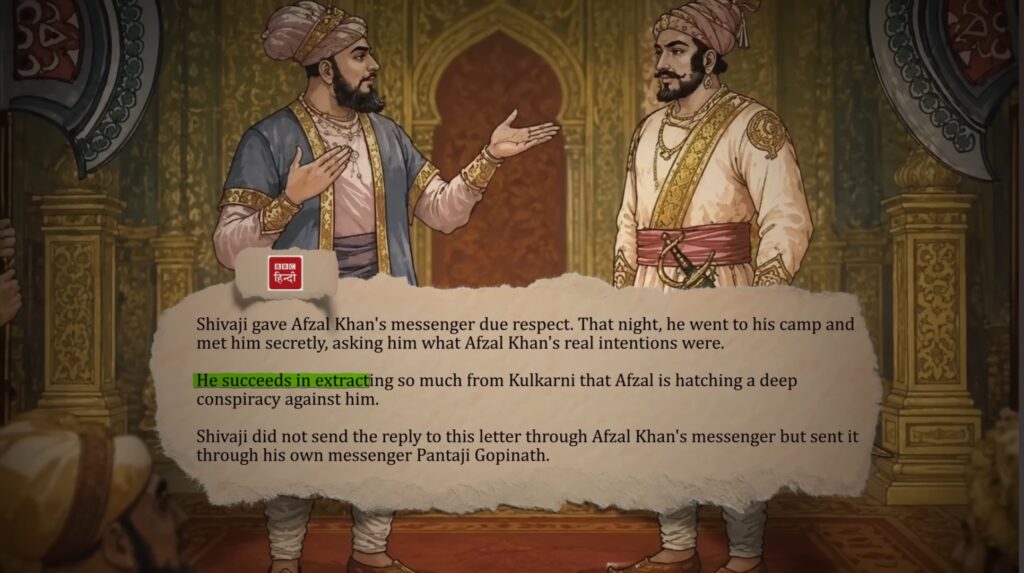
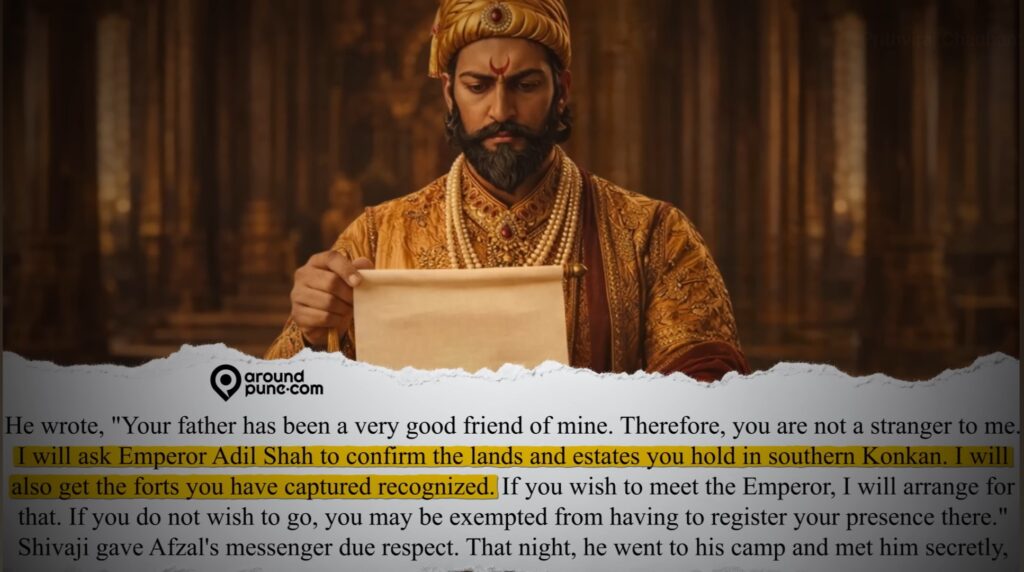
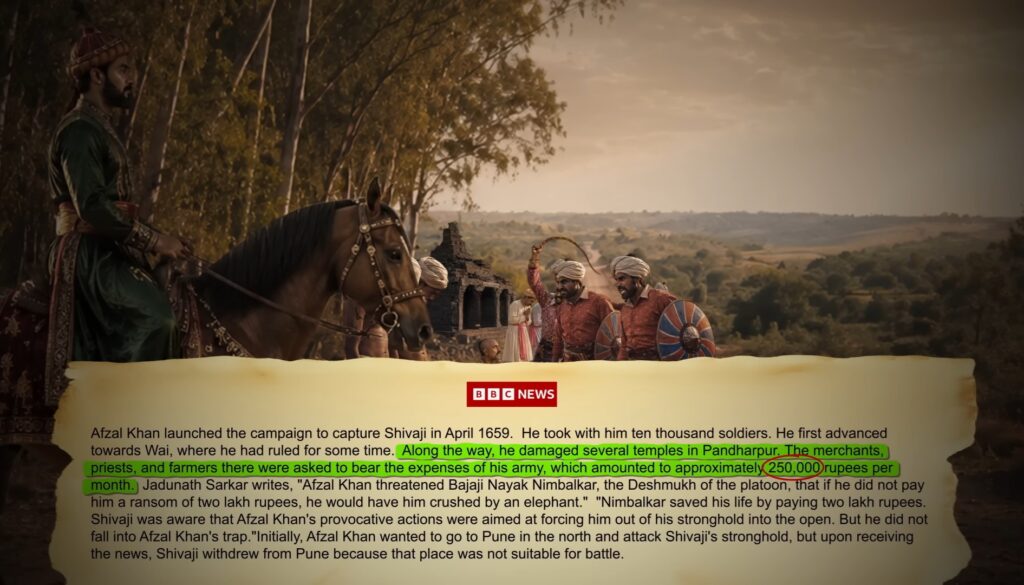
However, instead of attacking directly, he first provoked him by damaging several temples along the route and forcing the local merchants, priests, and farmers to pay for his army’s expenses, which amounted to approximately ₹5 lakh per month. He also forcibly extorted ₹1 lakh from Shivaji Maharaj’s brother-in-law, Baji Nayak Nimbalkar. By doing this, he intended to draw Shivaji Maharaj into an open battlefield. Shivaji Maharaj was known for guerrilla warfare. Shivaji Maharaj was aware of his every move, so he avoided direct combat and left Pune and made the dense forest of Javli his base. A game of diplomacy ensued between the two sides. Afzal Khan sent Shivaji a false offer of friendship, promising him respect at the Bijapur court if he agreed to a truce, and the forts he conquered would be recognized by the court. Chhatrapati Shivaji Maharaj was also a master of diplomacy and could quickly discern an enemy’s intentions. He learned from a conversation with one of Afzal Khan’s emissaries that Afzal Khan intended to assassinate him. He responded in kind, calling him a great commander and inviting him to Javli. Shivaji Maharaj also promised that if he came there, he would personally present his sword to him. Afzal Khan, believing Shivaji had fallen for his deception, agreed to meet him on a hill below Pratapgad Fort. A meeting was arranged for November 10, 1659, in a grand tent beneath Pratapgad Fort. It was agreed that both sides would arrive with a much smaller army. Shivaji Maharaj knew that Afzal Khan was not only cruel but also a liar and a cunning person.
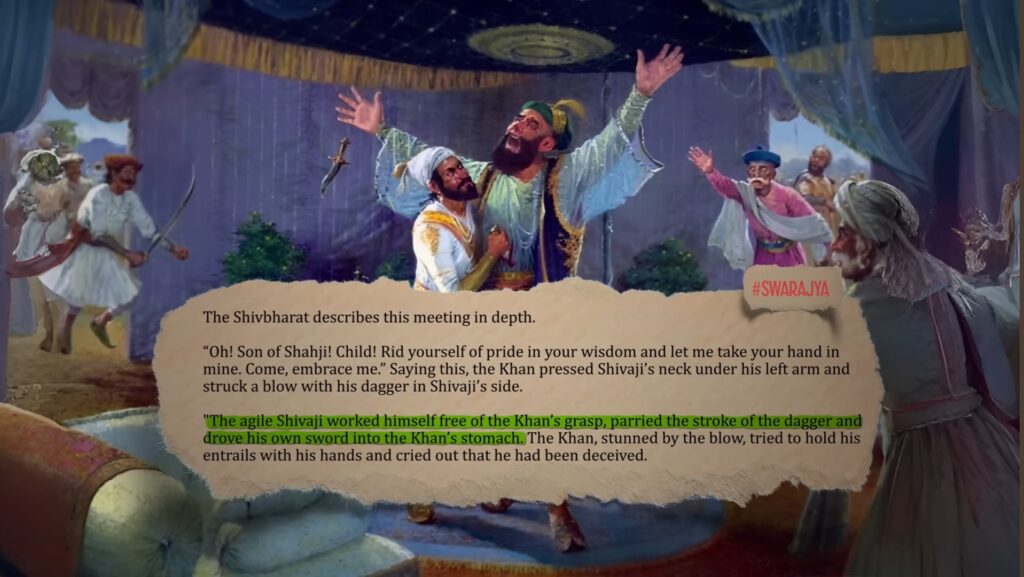
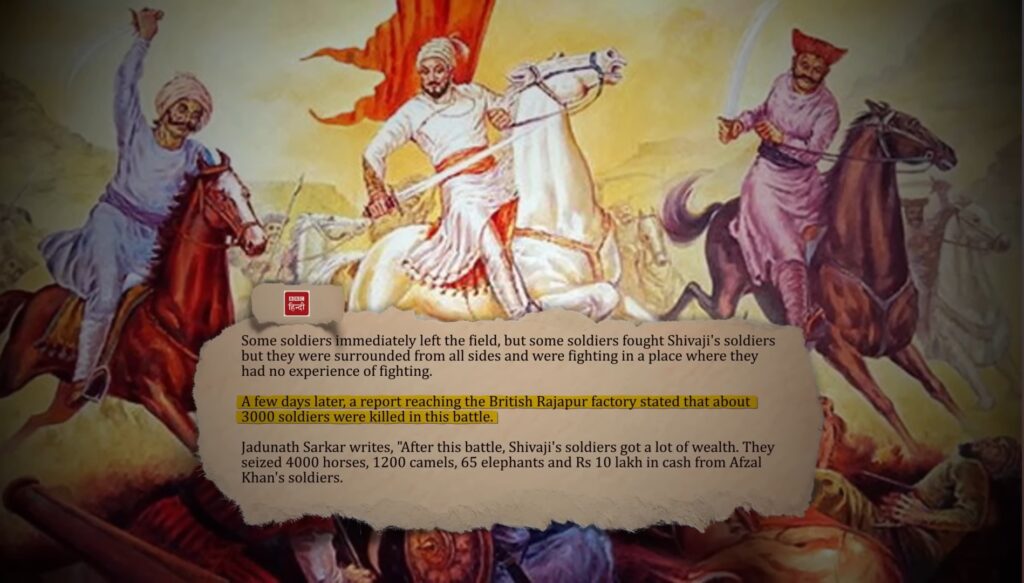
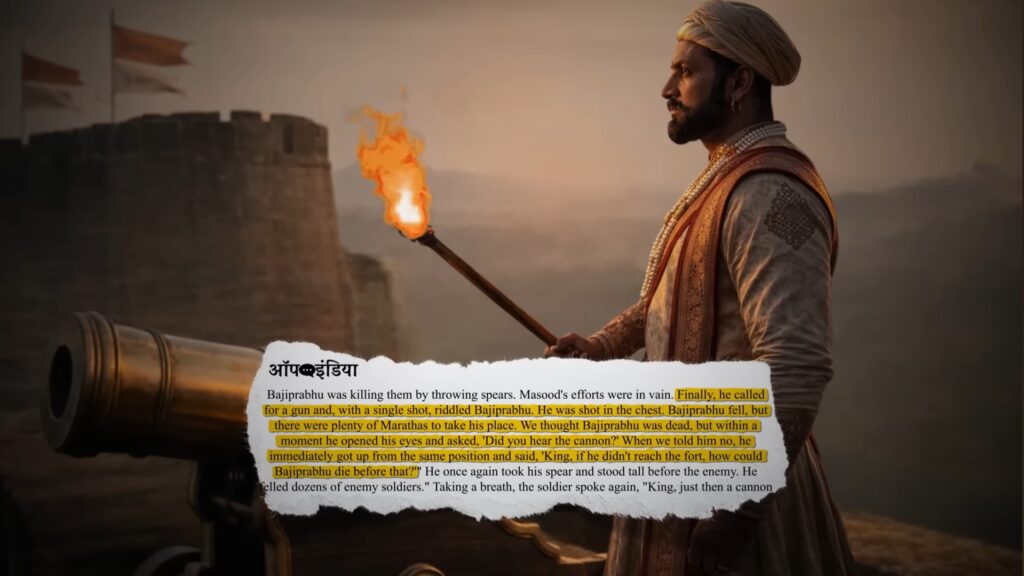
So, before meeting him, he donned an iron armor under his cloak. He wore an iron cap under his stiff turban, concealed a tiger claw in his left hand, and a weapon called a bichua in his right, hidden in such a way that no one could see it. A short while later, when the two came face to face, Afzal Khan smiled and extended his arms to embrace Shivaji Maharaj. But Afzal Khan’s intentions were not entirely noble. He was nearly 7 feet tall, and taking advantage of this, he caught the shorter Shivaji Maharaj in his strong arms and attacked him with a dagger. But Shivaji Maharaj was already fully prepared. The iron armor worn under his cloak saved his life. He then regained his composure and stabbed Afzal in the back with the tiger claw in his left hand, while using the bichua hidden in his right hand, he stabbed him in the stomach. Afzal Khan cried out in pain, “Treachery, betrayer, he has attacked me! Kill him immediately.” He freed himself and began to flee, but Shivaji Maharaj’s men were alert. They quickly beheaded the wounded Afzal Khan and presented his head to Shivaji Maharaj. Subsequently, the Maratha army, hidden in the forest, attacked from all sides, killing approximately 3,000 soldiers accompanying Afzal Khan, and looting his 4,000 horses, 1,200 camels, 65 elephants, and approximately ₹1 million. Thus, Chhatrapati Shivaji Maharaj trapped Afzal Khan in his own trap, killing him, and inflicting a major blow on the Bijapur Sultanate. He also seized the fort of Panhala from the Bijapur Sultanate. The royal court of Bijapur trembled at the sight of Shivaji Maharaj’s might. Saffron flags fluttered rapidly on the forts, and chants of “Har Har Mahadev” and “Jai Bhavani Jai Shivaji” echoed everywhere. In this situation, Bijapur, playing its biggest gamble, launched a massive attack on Panhala Fort with 40,000 soldiers under the leadership of Siddhi Johar, encircling it from all sides. This siege lasted not just a few weeks but nearly five months, and the situation now made it crucial for Shivaji Maharaj to escape. Knowing that breaking through the siege was impossible, he decided to attack with his mind rather than his sword. One night, two palanquins were quietly prepared. In the first palanquin sat Shiva Kashid, who was Shivaji Maharaj’s barber, but his features, stature, and mannerisms bore a striking resemblance to Shivaji Maharaj. He was dressed like the Maharaja and sent out through the main road. In the second palanquin was Shivaji Maharaj himself, accompanied by his commander Baji Prabhu Deshpande and approximately 300 brave soldiers, who were about to leave the fort through a secret passage. As soon as the first palanquin left the fort, Siddhi Jauhar’s soldiers surrounded it from all sides. They thought they had captured Shivaji Maharaj. Rejoicing with joy, they took the palanquin directly in front of Siddhi Jauhar. For a moment, Siddhi Jauhar was deceived, but soon realized that the real Shivaji Maharaj was not in front of him. His anger erupted and he shouted at Shiva Kashid, “Aren’t you afraid of your own death?” Shiv Kashid replied fearlessly, looking straight into their eyes, “If one Shiv dies for Swaraj, thousands of Shivs will be born.” The very next moment, Siddhi Johar got angry and killed him on the spot. After this, Siddhi Johar sent his soldiers behind Shivaji Maharaj. Shivaji Maharaj wanted to reach Vishalgarh fort as soon as possible, braving heavy rains, dense forests and difficult paths. In such a situation, his commander Baji Prabhu Deshpande came forward and said, Maharaj, you move towards Vishalgarh with some soldiers, I will not give up my life until you reach there. Swaraj needs you. It was decided that upon Shivaji Maharaj’s arrival at Vishalgad, a cannon shot would be fired, signaling his safe arrival. Shivaji Maharaj then set out for the fort, and Baji Prabhu Deshpande, with a small contingent of about 300 soldiers, faced thousands of Siddhi Jauhar soldiers at Ghorkhind. He was severely wounded in the ensuing attacks, bleeding profusely. However, he held on until he heard the sound of cannon fire from Vishalgad Fort.
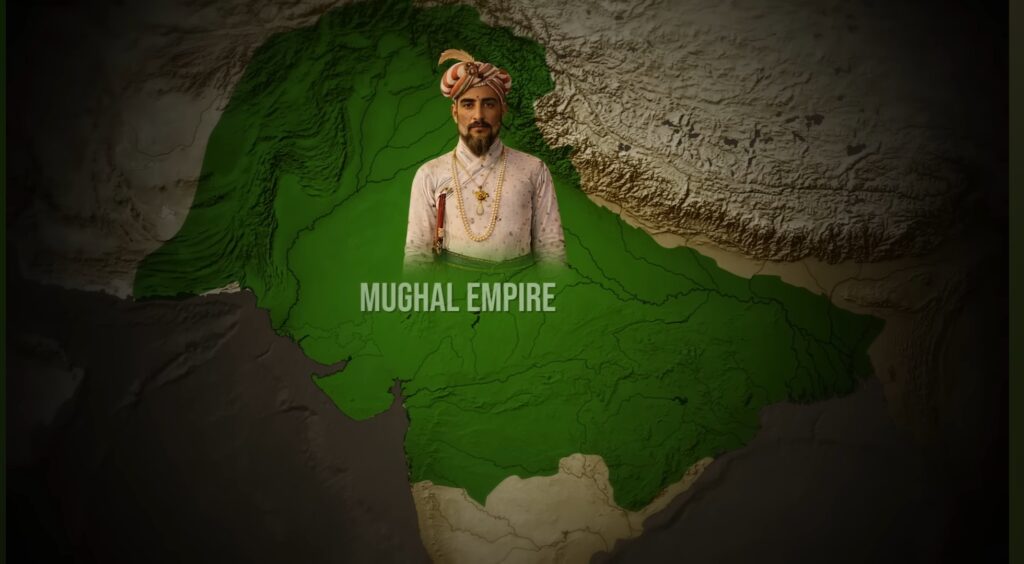
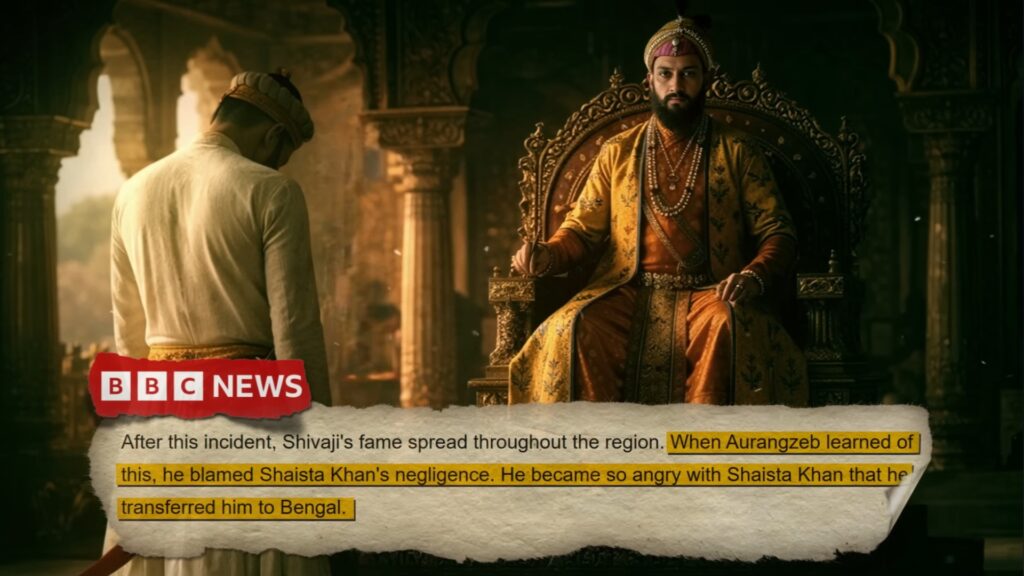
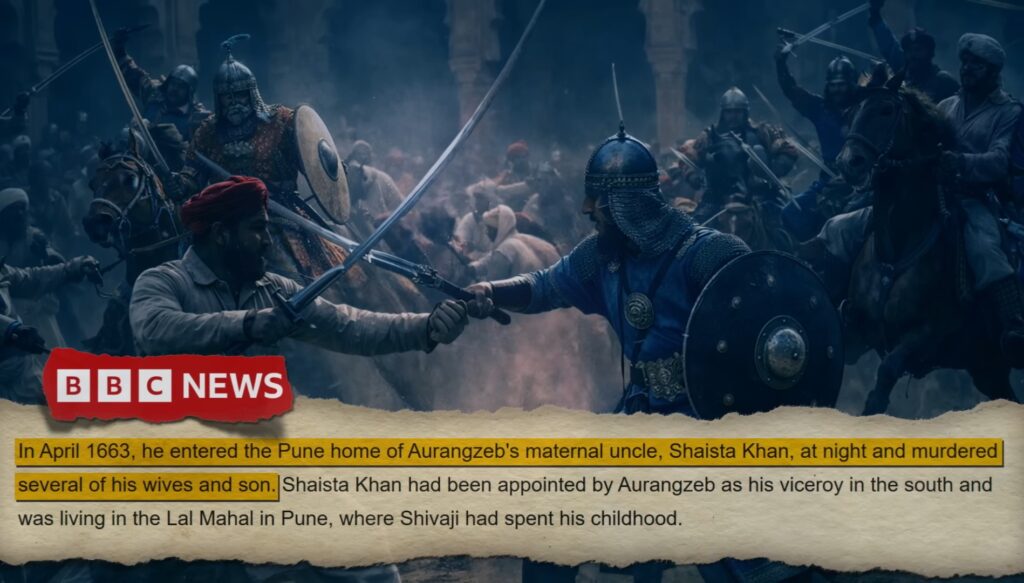
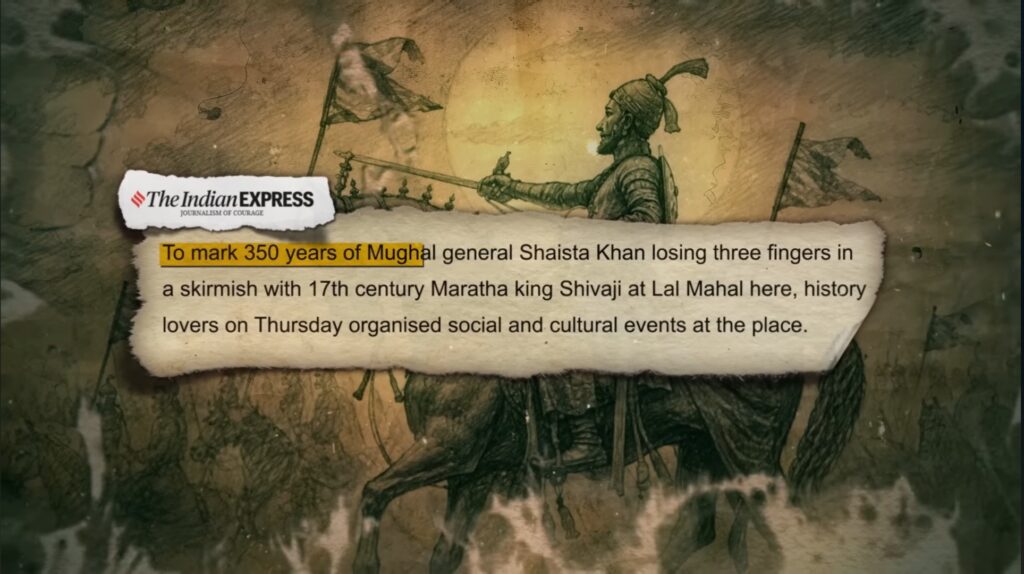
His sacrifice was immortalized in Maratha history, and Chhatrapati Shivaji Maharaj renamed Ghorkhind as Pavan Khind in honor of his valor. After conquering several forts from the Bijapur Sultanate, Chhatrapati Shivaji Maharaj set his sights on the Mughal-held territories. At that time, the Mughals were under the control of the ruthless ruler Aurangzeb, who intended to conquer the Deccan during his lifetime. This included areas of present-day Maharashtra, Karnataka, and Telangana, as well as Andhra Pradesh, Chhattisgarh, Madhya Pradesh, and Tamil Nadu. Aurangzeb was notorious for forcing religious conversions, destroying temples, and imposing the Jaziya tax on Hindus. However, Chhatrapati Shivaji Maharaj acted as a hindrance to his advances, and he began raiding Mughal territories without fear. Aurangzeb, therefore, sent his uncle, Shahista Khan, to stop Shivaji Maharaj. In January 1660, Shahista Khan arrived in the Deccan with approximately 150,000 soldiers and gradually began capturing Shivaji Maharaj’s conquered territories. He soon captured Pune, and after two months of fierce fighting, captured Chakan Fort, which Shivaji Maharaj renamed Sangram Durg. However, at this fort, the Maratha chieftain Firangoji Narsala, with only 320 soldiers, displayed remarkable bravery by holding off a 20,000-strong Mughal army for 56 days. After conquering Chakan Fort, Shahista Khan occupied the Lal Mahal and remained encamped there for nearly three years. Shivaji Maharaj had spent his childhood in the Lal Mahal, and the place was dear to him. Therefore, by seizing it, Shahista Khan was provoking him into open warfare. However, Shivaji Maharaj, having united his chieftains, waited for the right moment to retaliate against Shahista Khan. When Shahista Khan became complacent after a considerable period of time, on the night of April 5, 1663, Chhatrapati Shivaji Maharaj, along with 400 Maratha chieftains, suddenly attacked the Lal Mahal. Upon seeing Shivaji Maharaj, Shahista Khan was terrified and, in a panic, jumped out of awindow to flee. However, by then, Shivaji Maharaj had already cut off three of his fingers with his sword. Furthermore, he and his army killed hundreds of Shahista Khan’s guards, including his son. It is said that after this defeat, Aurangzeb was so enraged with Shahista Khan that he banished him from the Deccan to Bengal. Shivaji Maharaj, besides being a valiant warrior, was also a capable administrator. He understood that states could not only be governed by winning wars, but also by amassing vast wealth. Consequently, he focused his attention on Surat, one of the wealthiest trade hubs of the time and the richest port city of the Mughal Empire. It was from here that Arab, Persian, British, and Portuguese merchants traded and paid millions in taxes to the Mughals every year. Consequently, in January 1664, they attacked Surat, seizing money, gold, silver, and other valuables, valued at approximately ₹1 crore (approximately $10 million). Aurangzeb now fully understood that defeating Shivaji Maharaj would be a difficult task. Therefore, he made his final and most dangerous move, sending his most astute general, King Jai Singh of Amer, with a large army to capture Shivaji. This led to a fierce battle between Shivaji Maharaj and Jai Singh. During this battle, the legendary warrior Murar Baji Deshpande died defending Purandar. Even Jai Singh himself was stunned by his bravery. During this battle, Jai Singh besieged the fort of Purandar, Shivaji Maharaj’s strongest pillar. Jai Singh’s army also devastated the surrounding villages and supplies. This made Shivaji Maharaj understand that if this war continued, the common people would starve to death. He felt that retreat was the only way forward. Therefore, he was forced to sign the Treaty of Purandar with Jai Singh. It is said that under this treaty, he had to surrender 23 of his 35 conquered forts to the Mughals and pay Aurangzeb a compensation of 4 lakh rupees. In return, Jai Singh promised Shivaji proper respect from the Mughals and the Bijapur Sultanate, and in return, persuaded him to travel to Agra to meet Aurangzeb.
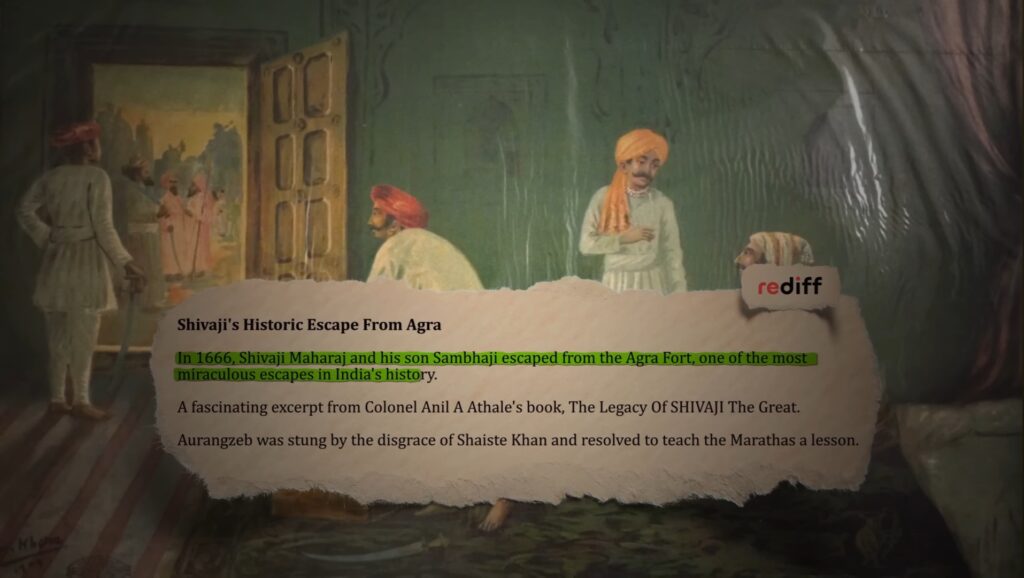
On March 5, 1666, Shivaji Maharaj, accompanied by his eldest son, Sambhaji Raje, arrived in Agra to meet Aurangzeb. However, instead of honoring him, Aurangzeb humiliated him and placed him and his son Sambhaji under house arrest. In this situation, even the bravest warriors could have lost their courage and surrendered. But Chhatrapati Shivaji Maharaj was a bird that could not be confined in a cage. Shivaji Maharaj knew that Aurangzeb wanted to forcibly confine him to Agra. Therefore, he employed a clever tactic. He suddenly became cheerful, joking with the Mughal guards, expressing his admiration for the city. A few days later, Shivaji Maharaj sent a message to Aurangzeb that he wanted to bring his mother and wife with him. These demands completely convinced Aurangzeb that Shivaji Maharaj had now accepted defeat and was not planning to flee. It was during this confusion of Aurangzeb and his guards that Chhatrapati Shivaji Maharaj made his next move, informing the guards that he had fallen seriously ill and should not be disturbed. After this, in the name of earning merit, he began sending baskets of fruits and sweets to the sadhus every evening. Initially the guards search the baskets they send out. But after several days of finding nothing unusual, they stopped searching the baskets. Shivaji Maharaj was waiting for this opportunity. One day in August 1666, he and his son, Sambhaji Raje, sat in separate fruit baskets meant for sadhus and escaped Aurangzeb’s house arrest. The guards, thinking it was routine, didn’t bother checking the baskets. When there was no movement from his room for several hours, the guards became suspicious. When they entered, they were shocked to find Shivaji Maharaj missing. When the chief guard, Falad Khan, told Aurangzeb this, he blurted out, “Madman, Shivaji has vanished. It’s not known whether he vanished into thin air or the earth swallowed him.” Aurangzeb was stunned, and in a rage, he sent his soldiers in every direction to capture Shivaji Maharaj. But all his efforts proved futile, as Chhatrapati Shivaji Maharaj cleverly chose a completely different route to reach Maharashtra. Instead of going southwest through Malwa and Khandesh, he chose the eastern route and, disguised as a sage, traveled through Mathura, Allahabad, Banaras, Puri, Gondwana, and Golconda before returning to Rajgarh. This was a testament to Chhatrapati Shivaji Maharaj’s intelligence, courage, and strategy. It turned even fortifications into the Mughals’ biggest failure. Shivaji Maharaj proved once again that wars are won not only with swords but also with minds. Aurangzeb, exhausted, accepted that confronting Chhatrapati Shivaji Maharaj was beyond his power and, acknowledging his growing stature, granted him the title of Raja. Thus, for the next four years, there was no major conflict between Shivaji Maharaj and Aurangzeb. However, during this period, Aurangzeb realized that Shivaji was inciting his son Muazzam to rebel against him. Furthermore, by the beginning of 1670, Shivaji Maharaj had begun attacking the Mughals to recapture the territories ceded to them in the Treaty of Purandar. This included the conquest of Kondana Fort, which Shivaji Maharaj won thanks to the bravery and sacrifice of his most trusted chieftain and close childhood friend, Tanaji Malusare. It is said that in early 1670, Tanaji Malusare was preparing for his son’s wedding.
But when he learned that Shivaji wanted to conquer Kondana Fort, he postponed his son’s wedding and, along with his brother Sur Malusare, attacked Kondana Fort. Aurangzeb had entrusted the fort’s security to Udaybhan Rathore. Located on a steep hillside, Tanaji Malusare, along with his brother and a few other soldiers, captured the fort after a fierce battle. However, Tanaji died in this battle. When Shivaji learned of this victory and Tanaji’s sacrifice, he exclaimed, “Gadhala Pansinla,” meaning, “We won the fort but lost our lion.” Furthermore, Shivaji Maharaj renamed the fort Sinhagad in honor of his friend Tanaji Malusare, who had displayed lion-like bravery in battle, disregarding his own life. Chhatrapati Shivaji Maharaj then raided Surat for the second time in October 1670, seizing property worth approximately 6.6 million rupees. Aurangzeb sent Daud Khan with a large army to intercept Shivaji Maharaj as he returned from Surat. In this situation, the Battle of Vani Dindori took place between the Mughals and the Marathas near Nashik. In this battle, Chhatrapati Shivaji Maharaj defeated the Mughals resoundingly, humiliating Aurangzeb once again. He then won the Battle of Umrani, defeating the Bijapur army. However, his commander, Pratap Rao Gurjar, was martyred in this battle. Shivaji Maharaj always respected women and was known for treating even the daughters-in-law of his enemies with great respect. In 1667 and 1668, after conquering the Kalyan Fort, Shivaji Maharaj’s commander, Aabaji Sondev, presented the beautiful daughter-in-law of Kalyan’s governor, Mulla Ahmed, along with the looted goods. However, instead of accepting the woman, Shivaji Maharaj respected her and praised her beauty, saying, “If only my mother were as beautiful, I would be as beautiful.” He then apologized to the woman and sent her back home with numerous gifts. He then strictly ordered his soldiers not to treat even the enemy’s women as booty. This demonstrated that he was not only a capable ruler but also an ideal man. Subsequently, on June 6, 1674, after overcoming many obstacles, Shivaji Maharaj was crowned in Raigad, his capital, in front of 500 people. He assumed the title of Chhatrapati, laying the foundation of the Maratha Empire. This meant that his power was not subject to anyone else, and he had become the ruler of an independent Hindu Swarajya. Furthermore, Chhatrapati Shivaji Maharaj also assumed the title of Hindu Dharmadwarak, meaning Protector of Hinduism. This was not just a coronation, but the official realization of his dream of Hindu Swarajya. This was to be preserved by other Maratha kings for hundreds of years to come. Upon assuming power, Shivaji Maharaj established a strong administration through the Ashta Pradhan Mandal (the eight-headed system), and rapidly expanded Maratha power through tax systems like the Chauth and Sardeshmukhi without burdening the common people. He strengthened the Hindu Swarajya (self-rule), protected religion and culture, and at the same time granted equal respect and freedom to people of all faiths. Therefore, the people considered him not just a king but their protector. Furthermore, Chhatrapati Shivaji Maharaj strengthened his kingdom’s defenses by strengthening a network of forts and established a powerful navy on the Konkan coast to secure trade routes and monitor forces like the British, Portuguese, and Siddis. His navy was small but swift and intelligently designed, capable of landing near the coast and launching a swift attack. This forced even the British to believe that the Marathas could reach areas they could not reach. This vision made Shivaji not just a warrior but a true nation-builder.
Chhatrapati Shivaji Maharaj expanded rapidly after 1675, conquering areas like Ponda, Karwar, and Kolhapur. By forming an alliance with the Qutub Shahi dynasty, he gained control of Karnataka forts like Vellore and Gingee, and further strengthened the Maratha Empire by conquering several Mughal territories. However, due to constant wars and illness, he died on April 3, 1680, at the age of only 50. His two sons, Chhatrapati Sambhaji Maharaj and Chhatrapati Rajaram Maharaj, carried on his legacy and preventedAurangzeb from conquering the Deccan. Later, the Peshwas, who held the position of Prime Minister of the Maratha Empire, became very powerful. Among them, Peshwa Bajirao I is revered with great respect. He expanded the Maratha Empire’s victory banner from South to North India. Thus, the victory flag of Hindavi Swaraj, established by Chhatrapati Shivaji Maharaj, continued to fly across India for hundreds of years.
